


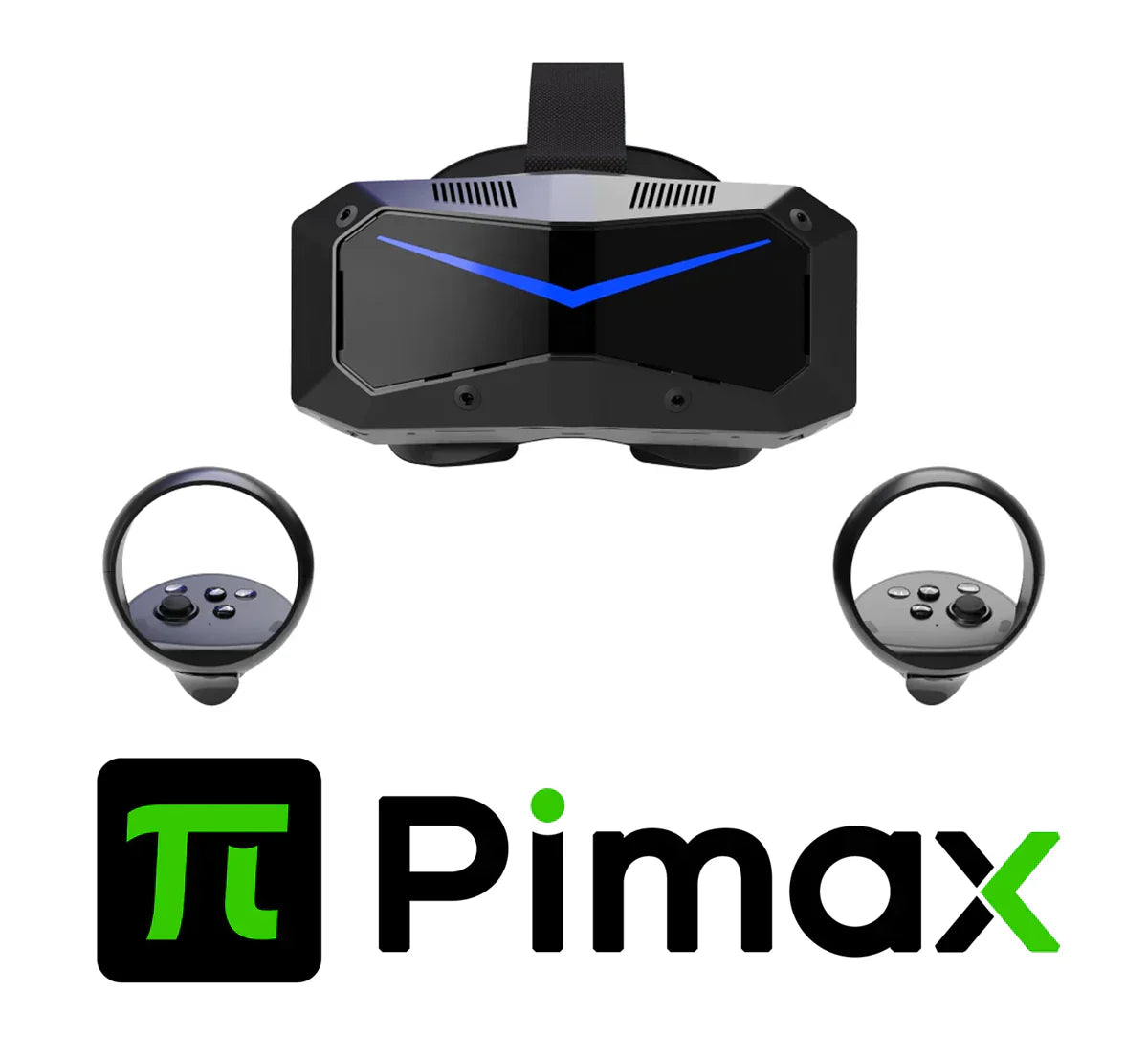
We just got our hands on the highly anticipated Pimax Crystal Super, and before we dive straight into the deep end, let’s get one incredibly important detail out of the way first: this is not a complete, final review.
True hardware testing takes time, especially when dealing with high-end PCVR gear that pushes the absolute boundaries of what current technology can achieve. We want to put serious hours into this headset, optimize our rendering settings, and see exactly how it holds up during long, intense gaming sessions before giving a definitive verdict. You can’t fully judge a piece of hardware like this after just a couple of hours on the dial.

You should also know right out of the gate that we are partnering with Pimax. Pimax is a phenomenal headset when it comes to racing and flight sims, but they reached out because they want to do better in the FPS market. We want to be completely transparent: we aren't affiliates, and we aren't here to drop a discount code or try to sell you a headset today. Our goal is to thoroughly understand this hardware and see how it performs in competitive settings. We believe in genuinely knowing a product inside and out before we align ourselves with any brand. Right now, our initial impressions are highly positive, and we love what the Pimax brand is trying to accomplish. They are making a massive, dedicated push into the first-person shooter (FPS) market for virtual reality, and we want to help them get there by providing honest, constructive feedback from a creator and player perspective.
Unboxing a Next-Gen Visual Powerhouse
Taking the Crystal Super out of the box, the very first thing that hits you is the sheer scale of the engineering. Pimax has moved to an incredibly innovative interchangeable optical engine system, allowing users to swap between QLED and Micro-OLED optics.

But engineering aside, the raw pixel horsepower under the hood is staggering. We are talking about a mind-blowing 3840 x 3840 resolution per eye. To put that into perspective, that is a massive jump in pixel density compared to standard consumer headsets on the market today.
When you boot it up and align the lenses, the visual clarity is an absolute gut-punch in the best way possible. The screen-door effect is completely non-existent, replaced by a hyper-sharp, continuous image that makes virtual environments feel startlingly tangible.
- The Sharpness of Glass Lenses: The custom glass aspheric lenses deliver an incredibly crisp image from edge to edge. Spotting a distant target down a physical red-dot sight, tracking minor movements across a field, or reading fine telemetry data on a dashboard happens completely naturally, without any of the usual squinting or head-repositioning.
- Contrast and Local Dimming: Thanks to the high-end panels and upgraded local dimming zones, the contrast ratios are fantastic. Deep shadows look genuinely dark and moody without crushing the fine details hidden within them. In competitive shooter environments, being able to distinguish a player model hiding in a dark corner is a massive tactical advantage, and the Crystal Super delivers that clarity effortlessly.
The Wired Truth: Uncompressed Clarity vs. Wireless Convenience

I’ll be completely honest: initially, the thought of going back to a wired headset felt like it was going to be an annoying step backward. If you have grown accustomed to the untethered, standalone freedom of headsets like the Meta Quest 3, the idea of managing a physical tether to your PC can make you hesitate. You wonder if you are going to feel restricted, if the cable weight will pull on your head, or if it will break immersion during quick movements. If you want to know the specifics of the differences between tethered and untethered VR gaming, you should read up on it.
But the exact second you experience a native, uncompressed DisplayPort signal pumping directly from a high-end graphics card into these displays, every single bit of that doubt completely evaporates.
The trade-off is well worth it, and frankly, it’s not even a close contest. Because it utilizes a direct physical connection, there is zero compression artifacting. There is no wireless latency spikes, no bit-rate drops, and no visual muddying when you turn your head quickly. What you get instead is an overall level of buttery smoothness, stability, and raw, unadulterated visual fidelity that standalone streaming simply cannot touch. It serves as an immediate reminder of exactly what high-end PCVR is supposed to feel like when it isn't bottlenecked by Wi-Fi bandwidth.
The FOV Leap and the Sim Racing Addiction
Sticking with that Quest 3 comparison for a moment, the field of view (FOV) increase on the Pimax Crystal Super is absolutely phenomenal. It completely eliminates that restrictive, claustrophobic "scuba goggles" feeling that has plagued standalone VR for years. By expanding your horizontal and vertical peripheral vision, it naturally widens your situational awareness and makes the virtual world wrap around you the way reality does.
Where this expanded field of view and uncompressed resolution completely blew me away was in Sim Racing.

I actually started out my sim racing journey playing on a regular gaming monitor. It was a solid setup, but making the jump to a high-fidelity VR headset like this is an entirely different level of reality. The sense of scale and raw speed, along with moving your body naturally as you would driving a real car, simply puts you deep into the game. Thanks to the wider FOV, you gain incredible spatial awareness; you can see the exact positioning of rival cars in your peripheral vision, feel the proximity of the track walls, and look naturally through your side window into the apex of a tight corner to nail your braking points.
The depth perception alone alters how you drive. Your brain stops calculating distances based on flat visual cues and starts reacting to actual 3D space. It is a completely transformative experience for simulation enthusiasts. I am officially, completely hooked. There is absolutely no going back to a flat monitor screen after experiencing racing like this.
What’s Next for Our Testing?
So far, our initial impressions of the hardware are incredibly positive. We genuinely love the ambitious direction Pimax is heading with their hardware architecture. Their drive to innovate, push boundaries, and conquer both the high-end simulation space and the tactical first-person shooter market is exactly the kind of disruption the VR industry needs right now.
But as we said at the start, we are just getting started with this unit. Over the next few weeks, we are going to subject the Crystal Super to a brutal, comprehensive testing phase in our shop. We will be analyzing tracking latency during rapid-fire movements, checking fast-paced competitive stability in demanding multiplayer lobbies, and seeing exactly how it handles frame rates when the racing grids get crowded with 20+ cars on track.
We want to ensure we encounter every quirk, discover every optimization trick, and find the true limits of this headset before we give you our final thoughts. Stay tuned, keep an eye on our upcoming content, and look out for the full, deep-dive breakdown coming your way once we log the serious hours this device deserves.

Leave a comment
This site is protected by hCaptcha and the hCaptcha Privacy Policy and Terms of Service apply.